

Inside The Students For A Democratic Society Anti-ICE Organizing Kit (Exclusive)
This is their playbook for organizing on college campuses.

I’m 100% funded by people like you. If you appreciate my work, please support it.
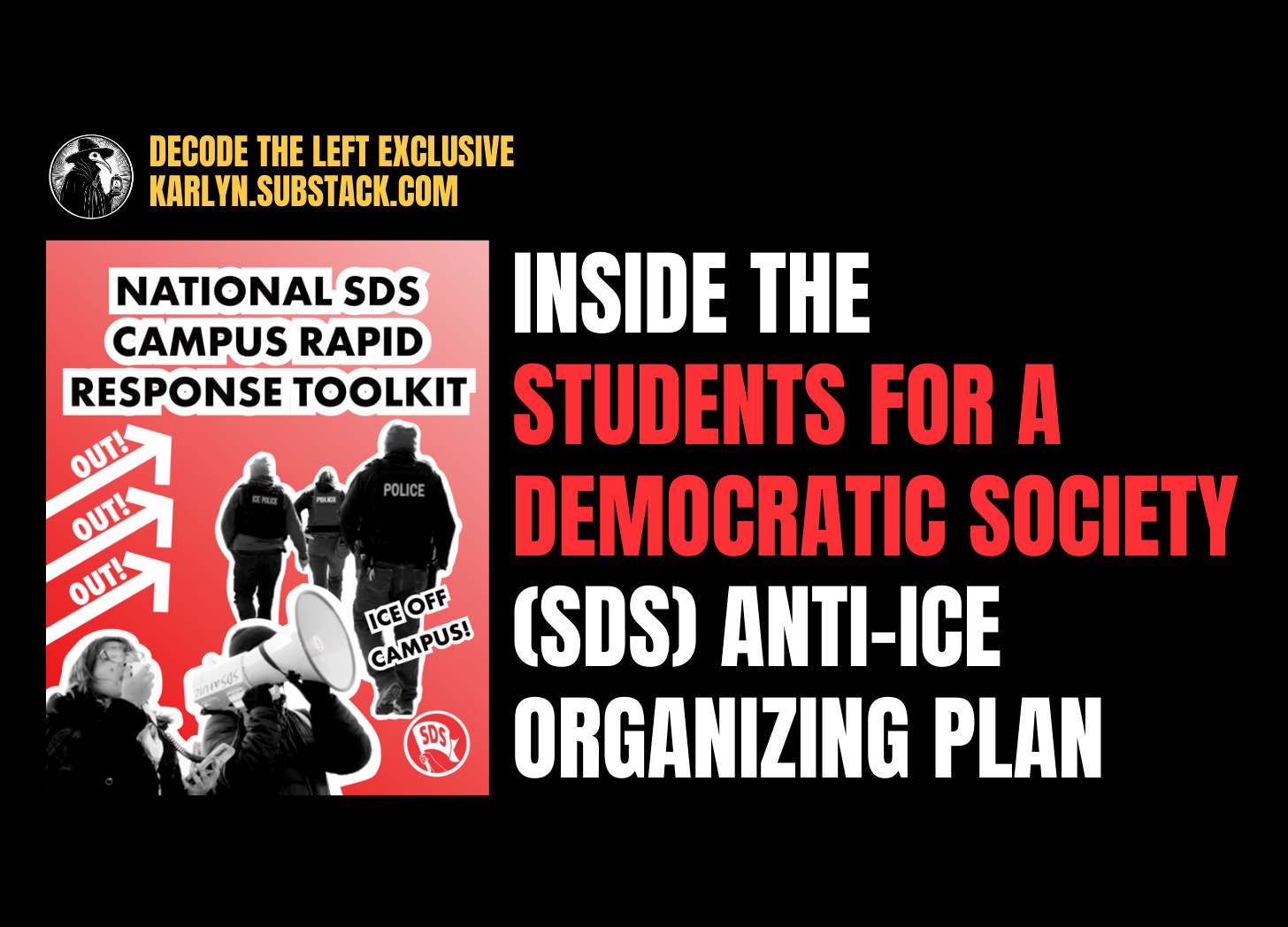
The Students for a Democratic Society (SDS) have been one of the key groups pushing anti-ICE organizing on college campuses around the country.
They have just released a rapid response organizing kit to guide students to kicking ICE off of their campus.
Find the full document here or download a PDF here:

This toolkit is a campus-level operational blueprint for monitoring ICE presence, managing how that information reaches the public, mobilizing students quickly, and converting individual incidents into sustained institutional pressure on university leadership.
Here is what that translates to in behavior and strategy.
What You Can Expect to See
If this model is active on a campus, expect:
• A small internal team quietly reviewing reports before anything goes public
• Structured, confident “confirmed sighting” posts instead of rumor chains
• Students calmly filming and documenting officers
• Emergency rally calls within 24–48 hours of a detention
• Faculty and union speakers integrated into demonstrations
• Immediate policy demands aimed at administrators
This is a standing system built to activate repeatedly.
The Organizing Architecture
1. Pre-Built Response Infrastructure
Chapters are instructed to establish:
• A core decision-making group
• An encrypted coordination channel such as Signal
• A public reporting form for tips
• Pre-designed alert templates
• Contact information for immigration attorneys or rights groups
The structure exists before incidents occur. That allows for coordinated, immediate action.
2. Centralized Information Control
All reports flow inward first.
The core group:
• Reviews social media claims
• Confirms or dismisses sightings
• Dispatches members to investigate when necessary
• Approves what gets published
They are instructed to publicly correct false reports if misinformation spreads.
The result is controlled messaging and credibility consolidation.
3. Standardized Documentation
The toolkit trains students to gather information in a uniform format.
That includes documenting:
• Officer count
• Agency identifiers
• Vehicle descriptions
• Time and location
• Equipment observed
• Warrant type if presented
They are told to film encounters and use a structured reporting method.
This creates consistent incident reports that appear organized and replicable across campuses.
4. Rapid Public Activation
Once a sighting is verified, chapters are directed to:
• Publish alerts immediately
• Circulate prepared graphics
• Call emergency actions
• Organize rallies within 48 hours if someone is detained
Speed increases visibility. Visibility increases pressure.
The response window is intentionally short.
5. Institutional Escalation
Rapid response feeds directly into policy demands.
The toolkit outlines calls for:
• No cooperation between the university and ICE/DHS/CBP
• No sharing of facilities, personnel, or information
• Campus police refusing to assist federal enforcement
• Immediate campus alerts if ICE is present
• Formal rights trainings for students and staff
Incidents become leverage points in broader sanctuary-style campaigns.
The focus shifts quickly from federal agents to university administrators.
6. Coalition Expansion
Chapters are encouraged to involve:
• Faculty
• Staff unions
• Other student organizations
Protests are positioned as campus-wide issues rather than isolated activist actions.
Coalition participation amplifies institutional pressure.
7. Legal Integration
In the event of detention, chapters are told to:
• Contact immigration attorneys
• Report incidents to rights organizations
• Share documentation with legal partners
This connects campus mobilization to external legal infrastructure and reinforces seriousness.
The Activation Cycle
The model runs on a repeatable sequence:
Report → Verify → Publish → Mobilize → Escalate → Demand institutional change
The infrastructure remains in place after each activation.
Over time, this builds:
• Campus authority over ICE reporting
• Rapid mobilization capacity
• Cross-campus coalition alignment
• Sustained pressure for formal non-cooperation policies
That is the organizing framework laid out in the toolkit.
Brilliant reporting, thank you.
I more or less thought that’s how it worked. Interesting.